
We used to hide under the desk when a royal story went around. “Bad luck”, we’d say in the lunchroom to whoever caught it.
“We’ll forget her soon enough”, said Charles. Yeah. Not Going to Happen
Eventually, I was chosen, dragooned - ‘or else’ wasn’t even implied - into the hunt. I was given a clothing allowance, an entertainment allowance, a dining room, butler and chef, a social secretary whose titled mother was a friend of the Queen Mother.
Entertain! Spend money! Lots of it!
Five years. Five long years of it between what I thought of as real work. It seemed endless. The strategizing, the invitations to lunch, dozens of them, the furiously expensive restaurants. Borrowing dresses. Crawling, blandishing my way up the hierarchy of parties, balls, charitable lunches, Ascot, getting into the Royal Enclosure, buying the damned hats, crawling up the polo ladder to invitational with 2500 others social climbers, to a “personal lunch party and polo” with Charles - only 150 people in a Palladian stately. One day I said to a friend, when leaving the city I loved, “At least I will never have to go to another party at Cartier.” She flinched because serving the great houses of commerce was the deal she (and we) had made. And the royals.
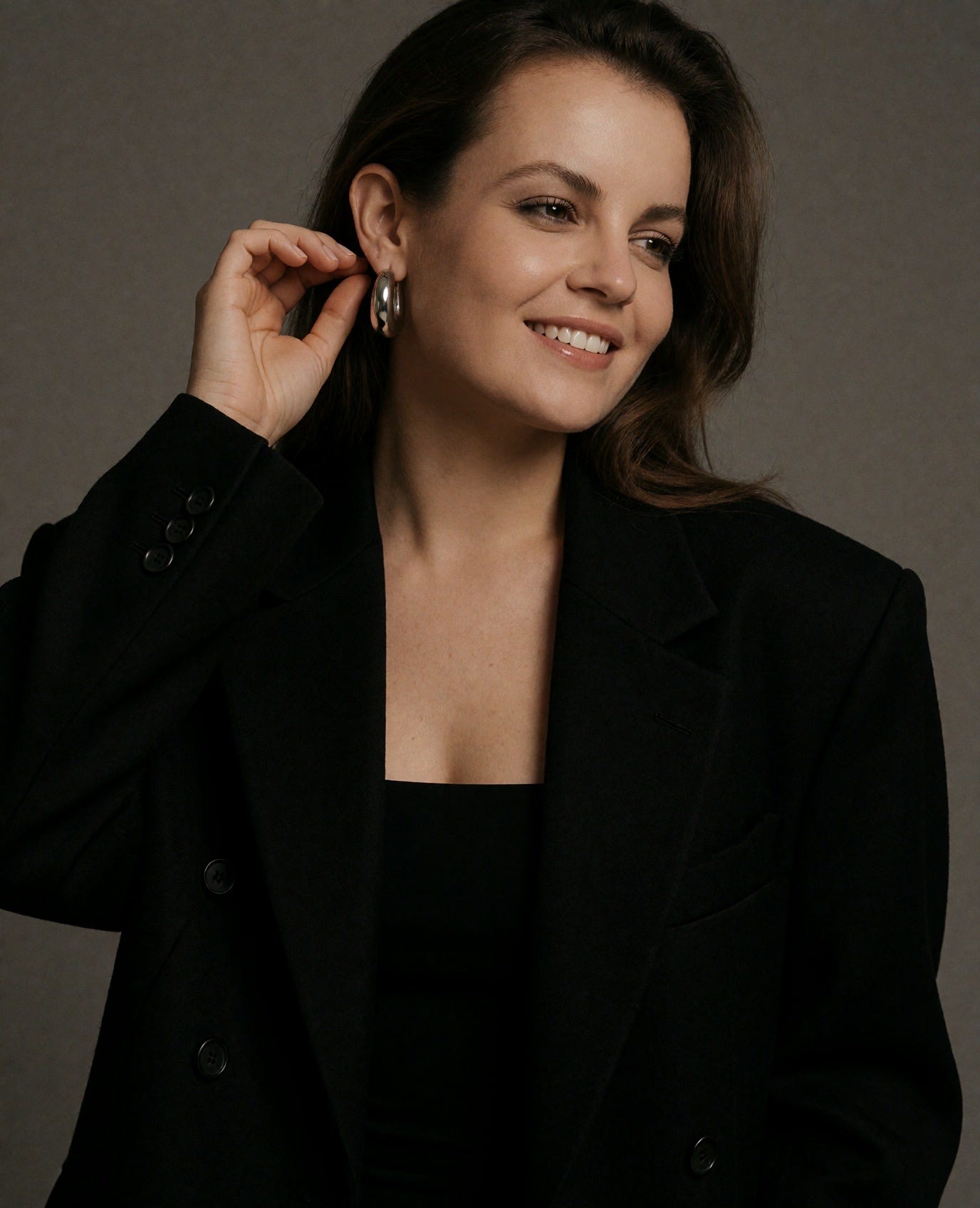
This is what I looked like at the time. I was never this carefree or happy or nice. But the way I looked cemented the directive. I was the acceptable face of the colonial gel, the acceptable face of “America”, which they hated and envied. The British aristocracy could just about bear to have me around, though the veiled insults were pretty much endless. Once, I said my great aunt had married the youngest son of the Duke of Sutherland, which she had, and a Countess blustered, “Impossible.” And she was a friend. God in heaven, I stumbled out of that world every part of me injured.
I gave lunch parties with Privy Council members and random royalty, like Princess Elizabeth of … Yugoslavia? Whatever. I gave a drinks party for 250 and invited the Duke and Dutchess of St. Albans because I liked their name, and when introduced she proffered me an index finger to shake because she didn’t want to get that close to a common American like me. I looked at it, absorbed the insult and shook her finger so hard, her arm moved.
Honestly, these people are APPALLING.
I lived near Kensington Palace and at night I would walk my giant red Doberman down the road that led to the Palace. It was blissfully quiet wandering down the allée in front of the massive residences of the super-super-wealthy and connected. They always let me through the gate, I was so obviously one of them. Or at least I could cosplay it. The deference of the courtier had been slammed into me since birth.
The first time I met her was before the hunt began, my first week on the job. I was taken to an Evian lunch for some charity and she was the guest of honor. I don’t think she spoke, or if she did, her voice was halting, quiet. The hotel was in Sloane Square, and every time I looked at her, she flinched. Maybe, green as she was, she had been told Time Magazine would be there. Afterwards in the receiving line, I stood among the jostling women and a thin hand - white like paper, cold - offered itself through the scrum and I seized it, shook it once and felt deeply ashamed of myself. She was skeletal thin, ill, so unwilling, a tool, a puppet.
I imagine the death of Charles and Camilla. A dark portal opening up, they carried off to hell.
I probably bobbed, curtseyed. The second time I met her, I was five years older, far more cynical and did not curtsey. I was paying for the lunch and I was working for the Americans, dammit. She raised her eyebrows, I shook her hand vigorously and complimented her on her speech where she spoke for all families, not just nuclear. A group of lesbians had stormed the stage and the panic in her eyes was total, geopathic. They were wrestled off.
Before the lunch, I was standing at the entrance flirting with cute security guards when she came leaping up the stairs, saw us, broad teasing smile and a wink.
All three of us were slain. We stumbled, clutched our chests, as if she had shot us through the heart.
The world broke in half when she died. It was the end of the formal old, the tentative screaming beginnings of the new, far less ritualized world. The world of feelings, of compassion, of inclusion, accompanied by lashings of clothes, makeup, fashion, handbags, charity events.
Diana built the modern world. Brick by brick. Including the desperate lack of critical thinking. The world watched her fight back against the grim tradition that would have buried her in duty, immured her in a palace to be trotted out for ceremony.
She broke them.
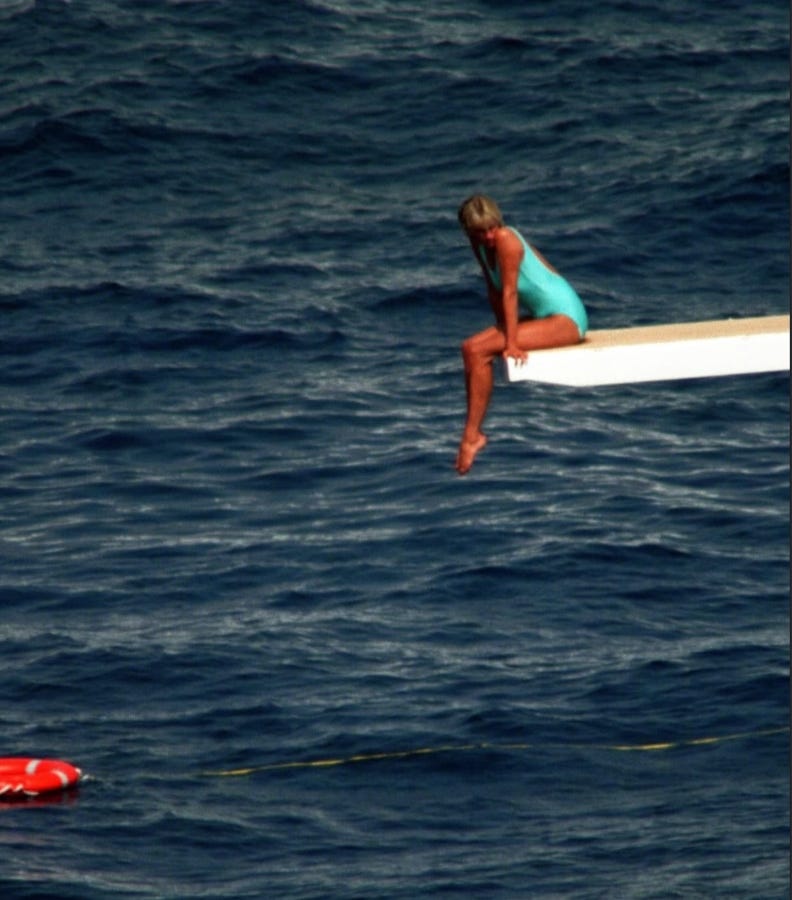
The heat around her was awful. I had nightmares about their marriage, which was shattered by the end of my stay. The east Londoners in Time Inc.’s telex room, working class heroes all, sneering at us daily, had realized what photographs of her meant. That summer they went adventuring, and were the ones who sold the photos of her on the yacht with Dody Fayed. They made $250,000 for just one shot and the game was on. That sale - to the Sun - led directly, directly to her death.
I was the nice one. That’s what I would say at lunch with Anne Beckwith Smith, her lady in waiting, with Charles’s equerry. I was the sedate one, all we wanted was her at home in her living room with the boys playing on the floor, a light-hearted interview in the midst of a family mess. For a picture magazine, the ideal reader of which was a high school principal. Classy. I’d hire any photographer she wanted, I’d do the interview, all deferential and empathic to the max.
So I would trail down to Buck House and petition Charles’s press secretary, Dickie Arbiter, the grizzled old git you see on TV all the time. He took to petitioning me back, calling me from his car on the way home to his grace and favor house on Windsor. “Could he come over and we would “talk”?”
Yeah, no.
I blame the grandmothers’ first. I can see them making the deal, identifying Diana’s beauty and charm, Charles’s catting around on steroids, and brokered the deal. All Princes of Wales’s had mistresses, she would understand being courtier class.
Yeah, no. Her brother, in this week’s massive bestseller, claims Charles told her the night before the wedding that he was very happy to marry her but he wasn’t in love with her.
Wrong thing to a girl who didn’t read anything but upper-class romances. Exactly the wrong thing. Her revenge was long, slow, and nearly destroyed him.
Eventually Dickie offered me an interview with the Prince of Wales, in Time Magazine; not my magazine, LIFE, so I sent the request to the geniuses in New York, with a plea attached that if that, then I’d get what I wanted.
They turned me down flat. Charles was seen, as he was, as a boring, self-important git seeking ever more and more attention. So he did charitable work. Zzzzz was the response from the 34th floor of the Rockefeller Center.
I persevered. My secretary engineered the permission of a formal invitation to him. A lunch party with his inner sanctum of 150 courtiers and usefuls at a Palladian house so glorious that you could seat 150 people at round tables of 12 for a formal lunch in its entrance hall.
I knew no one, but found a few misfits to talk to and eventually we were herded down to the polo field, where we extra extra special people had our own tent. Afterwards, Charles turned up, all sweaty, muscles bursting through his very tight clothes, in his vintage Aston Martin, and the reception line was formed. Or not formed so much as scrummed, in a circle.
My social secretary would push me forward manoevring me into place to shake his hand, and every time he caught sight of me he’d turn his back. Over and over and over again. Now you might not know it, but in this ghastly world, this is a profound insult, refined over many hundreds of years to demonstrate extreme displeasure and humiliation. Had I been a minor baroness, I would have had to retire to my country place and live in solitude for ten years until the fatwa was lifted.
I got the point.No means no. No access to Diana. No amount of money, no special gift, no featuring of his oh so noble work? Nothing. I was done. He sped off, looking sexy and powerful in that car, the muffler barely working. His next ten years? Catastrophe.
Charles Spencer’s biography of his sister, Diana, brought all this back, made me feel and think about it again. Charles loved Diana, and the book details her generally happy family life, the birth of her many virtues, the love and splendour that surrounded her. And the hell visited on her by my profession. Our cruelty, our blood stained viciousness. We, and Charles’s monumental envy of her sent her to her death.
That’s what I felt from him throughout our long association. He hated us for preferring her. The world’s celebration of her sent him back to his lover, Camilla Shand-Kidd. He abandoned a virtual child to jackals and wolves, pulled proper security, and delivered her hate, over and over and over again. He is, like his mileu, a man of low character. When Promethean Action identifies the British oligopoly and their banks as the source of evil in the Angloshere, the source of all the attacks on the American Republic, this is the kind of man - though far more competent - that runs them. Mean, snake-like, vain beyond measure. Villains the kind of which we have not yet seen in literature or film.
Tomorrow the policy hell Charles leashed on the world, courtesy of his ridiculous vanity.
I do not paywall, so it’s voluntary to pay me. I charge not very much compared to others, because you must have a lot of other subscriptions, I know I do. Please subscribe, despite my worry above, the next ten years are going to be transformative and in a very good way. We are going to get them and punish them and it will be spectacular.
You can buy me a coffee here
or
for those who don’t hate paypal, paypal me here
or
Become a Founding member here
Elizabeth Nickson was trained as a reporter at the London bureau of Time Magazine. She became European Bureau Chief of LIFE magazine in its last years of monthly publication, and during that time, acquired the rights to Nelson Mandela’s memoir before he was released from Robben Island. She went on to write for Harper’s Magazine, the Guardian, the Observer, the Independent, the Sunday Telegraph, the Sunday Times Magazine, the Telegraph, the Globe and Mail and the National Post. Her first book The Monkey Puzzle Tree was an investigation of the CIA MKULTRA mind control program and was published by Bloomsbury and Knopf Canada. Her next book, Eco-Fascists,,How Radical Environmentalists Are Destroying Our Natural Heritage, was a look at how environmentalism, badly practiced, is destroying the rural economy and rural culture in the U.S. and all over the world. It was published by Adam Bellow at Harper Collins US. She is a Senior Fellow at the Frontier Center for Public Policy, fcpp.org. You can read in depth policy papers about various elements of the environmental junta here: https://independent.academia.edu/ElizabethNickson.
Her essay on the catastrophic failings of Canada’s CBC is included in Michael Walsh’s Against the Corporate Media, 42 Ways the Press Hates You, published in September 2024
Noblesse oblige. Ironic that the monarchy is in tatters as the UK descends into a conquered Muslim nation.
The oppressive superiority of the British aristocracy was matched by their societal infidelity. Copulating at will with anything that moved.
Elizabeth 2 kept the Royal dream alive.
Now the monarchy is collapsing in real time, and your description is haunting me.
Perhaps Princess Diana’s death was merciful in its own way.
I am sorry you had to live it, but am grateful you did to tell the story. The British elites have always been our enemy in America - because we are far better than them. I hope and pray that Trump humiliates them more at every turn and he is starting with Carney.
Trump knows and so do both of our political parties who work for the world and not America. We know.
G-d bless you and prometheanaction!